What is Hydropower
Hydropower is one of the oldest and most reliable sources of renewable energy in human history. From ancient water wheels used for grinding grain to massive modern hydroelectric dams powering entire cities, water has played a major role in energy production for centuries.Today, hydropower generates electricity by converting the energy of moving water into mechanical and electrical energy. It is considered a renewable energy source because it relies on the natural water cycle driven by the sun. As the world searches for cleaner and more sustainable energy solutions, hydropower continues to remain a critical part of global electricity generation.
The Science Behind Hydropower
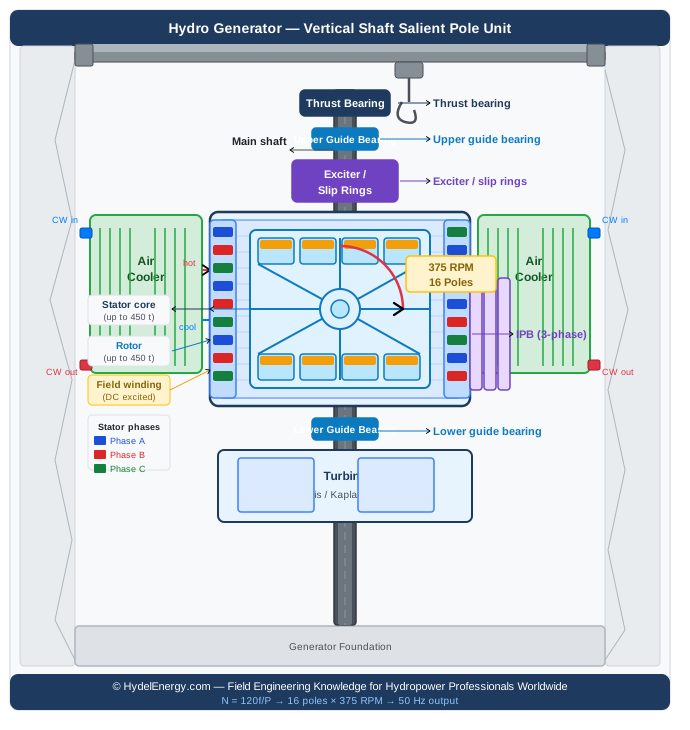
Hydropower is fundamentally based on the laws of physics and energy conversion.One of the most important scientific principles involved is the Law of Conservation of Energy, which states that energy cannot be created or destroyed, only transformed from one form to another.In a hydropower system, energy changes form multiple times during electricity generation.Water stored behind a dam contains gravitational potential energy because it is positioned at a higher elevation. As the water flows downward through the plant, this stored energy transforms into kinetic energy — the energy of motion.The faster the water moves, the greater its kinetic energy. This fast-moving water strikes turbine blades and causes them to rotate, converting kinetic energy into mechanical energy.The rotating turbine then drives a generator, which converts mechanical energy into electrical energy through electromagnetic induction.Hydropower systems also demonstrate concepts explained by Newton’s Laws of Motion.
According to Newton’s Second Law (F = m × a), force is produced when mass accelerates.In hydropower plants, enormous volumes of accelerating water generate strong forces capable of spinning turbines at extremely high speeds. This combination of gravity, motion, and energy transformation is what allows hydropower plants to generate electricity efficiently on a massive scale.
How Hydropower Works
At its core, hydropower operates on a relatively simple process.
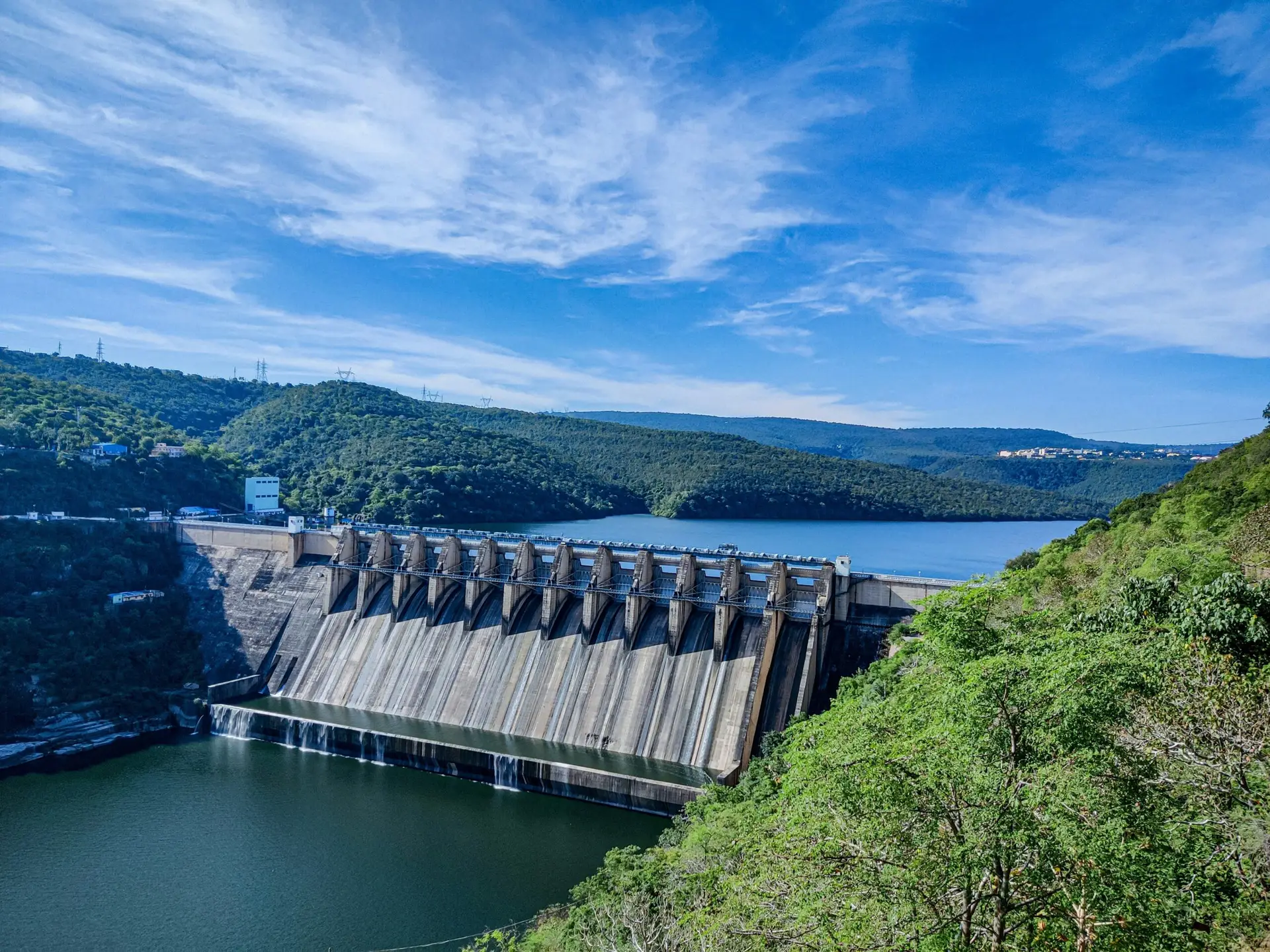
- Water is stored in a reservoir behind a dam
- Intake gates control the flow of water
- Water travels through large pipes called penstocks
- High-speed water spins massive turbines
- Turbines rotate generators
- Generators produce electricity
- Electricity is transmitted through power grids to homes and industries
The entire process converts the natural energy of flowing water into usable electrical power.
Why Hydropower Is Important
Hydropower is one of the most widely used renewable energy sources in the world. Many countries rely heavily on hydroelectric plants because they provide stable and efficient electricity generation.
Renewable Energy Source
Hydropower depends on the continuous water cycle, making it naturally renewable. Rainfall replenishes rivers and reservoirs, allowing power generation to continue for decades.https://hydelenergy.com/is-hydel-energy-renewable/
Low Carbon Emissions
Unlike coal or oil power plants, hydropower plants produce very low greenhouse gas emissions during operation. This makes hydropower an important technology in reducing global carbon emissions.
- Reliable Electricity Generation
One major advantage of hydropower is reliability. Unlike solar or wind energy, hydropower plants can often generate electricity continuously and quickly respond to changes in energy demand.
- High Efficiency
Hydropower plants are among the most efficient power generation systems in the world, with some facilities achieving efficiency levels above 90%.
Types of Hydropower Plants
Different hydropower systems are designed for different environments and energy needs.
1. Reservoir Hydropower
This is the most common type of hydropower plant. A dam stores large amounts of water in a reservoir and releases it when electricity generation is needed.
2. Run-of-River Hydropower
These systems use the natural flow of rivers with little or no water storage. They generally have lower environmental impact compared to massive dam systems.
3. Pumped Storage Hydropower
Pumped storage plants act like giant energy batteries. Water is pumped uphill during low electricity demand and released later during peak demand to generate power.
4. Micro Hydropower
Small-scale hydropower systems are designed for villages, remote communities, or individual facilities. These systems can provide renewable electricity without requiring massive infrastructure.
Advantages of Hydropower
Hydropower offers several long-term benefits.
- Clean Energy — Hydropower generates electricity without burning fossil fuels
- Long Lifespan — Many hydroelectric facilities operate efficiently for 50 to 100 years with proper maintenance
- Fast Response Time— Hydropower plants can rapidly increase or decrease electricity production when demand changes
- Energy Storage Potential — Pumped storage hydropower plays a major role in balancing modern renewable energy grids
Challenges and Environmental Concerns
Despite its advantages, hydropower also has challenges.
Large dams can:
- Alter ecosystems
- Disrupt fish migration
- Change river flow patterns
- Flood surrounding land
- Displace local communities
- Climate change may also affect rainfall and water availability, influencing long-term hydropower production in some regions.
- Because of these concerns, modern hydropower projects increasingly focus on sustainability, environmental protection, and smarter water management systems.
The Future of Hydropower
Hydropower continues to evolve alongside modern technology.
Current innovations include:
- AI-based water flow management
- Smart grid integration
- Fish-friendly turbine systems
- Hybrid hydro-solar power systems
- Advanced energy storage technologies
As countries transition toward cleaner energy systems, hydropower is expected to remain a critical component of global electricity generation.Rather than being replaced by newer technologies, hydropower is increasingly being integrated with solar, wind, and battery systems to create more stable and reliable renewable energy networks.
Final Thoughts
Hydropower demonstrates how natural forces can be transformed into large-scale electricity generation through engineering and physics. By combining gravitational force, water motion, turbine mechanics, and electrical generation, hydropower plants provide one of the most efficient renewable energy systems ever developed. Although environmental and engineering challenges still exist, hydropower remains a cornerstone of modern renewable energy infrastructure and will continue to play an important role in the future of sustainable electricity generation.