The Trishuli Floods: What Nepal’s Hydel Sector Lost, and What Comes Next
Nepal Trishuli hydropower flood 2026
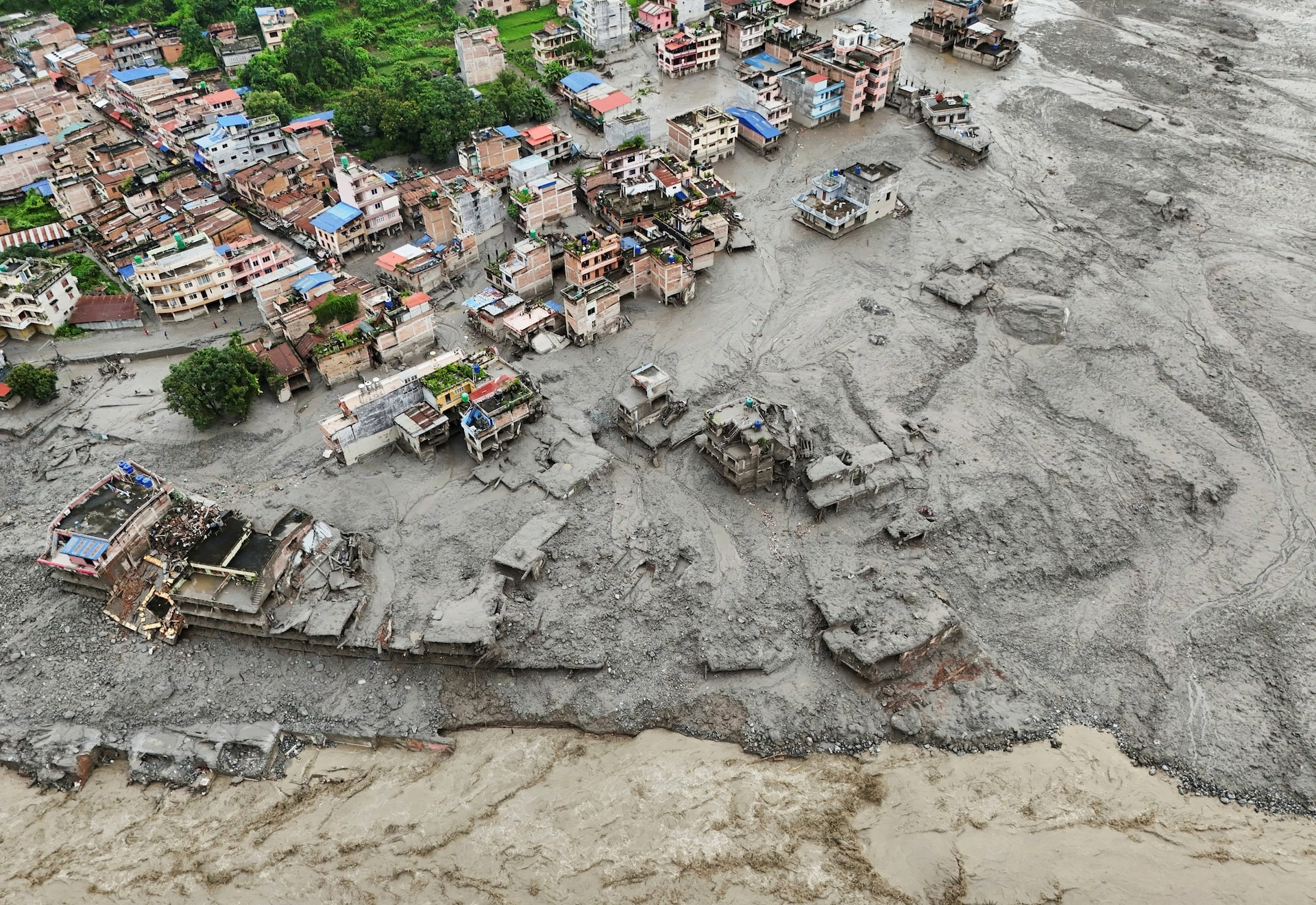
On August 26, 2026, a high-altitude ice-rock avalanche originating near Langtang Lirung detached an estimated 0.2 square kilometers of glacial mass. Falling over 1,000 meters into the Lhende Khola, the impact triggered a high-velocity outburst that sent millions of tons of water, mud, and heavy debris cascading into the Bhote Koshi and Trishuli river system—Nepal’s most densely built hydropower corridor.
When active search-and-rescue operations formally concluded in early October, the national toll stood at 1,455 confirmed dead and 5,285 still missing. Alongside the human tragedy, the flood caused the most severe infrastructure breakdown in the history of Nepal’s renewable energy sector.
Infrastructure Loss & Capacity Hit Across the Trishuli Basin
Hyper-concentrated sediment carrying boulders and timber acted like a battering ram, stripping surface civil structures, overtopping desanders, and breaching intake systems along a 100-kilometer stretch.
Damage & Status Matrix of Affected Hydropower Projects
| Hydro Project / Infrastructure Node | Installed Capacity | Asset Type | Post-Disaster Operational Status |
| Devighat Hydroelectric Station | 14.1 MW | Run-of-River | Wiped Out: Surface powerhouse and intake destroyed; buried in silt. |
| Trishuli Hydropower Station | 24.0 MW | Run-of-River | Severely Damaged: Tailrace and civil intake breached (Nepal’s 2nd-oldest station). |
| Upper Trishuli 3A | 60.0 MW | Run-of-River | Halted: Access tunnels inundated; site of intensive 9-day worker rescue operation. |
| Rasuwagadhi & Chilime | 111.0 MW (Combined) | Run-of-River | Inundated: Headworks clogged with sediment; open-air switchyards damaged. |
| Upper Trishuli-1 (Under Const.) | 218.0 MW ($647M) | RoR / Storage | Major Setback: Over 90% of upper dam structure destroyed at 84% completion. |
| Trishuli 3B 220kV Substation | Grid Hub | Transmission | Washed Away: Destroyed main grid node, stranding 146+ MW of undamaged upstream power. |
Sector Loss Statistics
- 281 MW of active, operational capacity was directly knocked offline or destroyed.
- 388 MW of under-construction capacity suffered severe, multi-year construction setbacks.
- $4.77 Billion estimated reconstruction cost for government and private operators across affected zones.
Forensic Engineering: Underground vs. Surface Powerhouse Siting
Post-event engineering assessments across the Trishuli corridor highlighted a sharp divergence in survival rates based on structural architecture:
SURFACE POWERHOUSE & INTAKE (HIGH RISK)
┌─────────────────────────────────────────┐
│ Surge + Boulder Load ──► [ Surface Dam ] │ ──► Structural Breach & Silt Burial
│ [ Open Hall ] │
└─────────────────────────────────────────┘
SUBTERRANEAN CAVERN DESIGN (HIGH RESILIENCE)
┌─────────────────────────────────────────┐
│ Flood Surge ─────────► [ Gated Portal ] │ ──► Gates Closed; Rock Cavern Intact
│ [ Underground ] │ ──► Mechanical / Power Assets Safe
└─────────────────────────────────────────┘
- Surface Facilities (High Failure Rate):Open-air powerhouses, surface penstocks, and shallow riverbed desanders suffered complete or structural failure. Kinetic forces from boulder-laden slurry collapsed walls and buried switchyards.
- Subterranean Caverns (High Survival Rate):Projects engineered with underground powerhouses, deep rock desanding caverns, and fortified tunnel portals performed exceptionally well. Where emergency portal gates were shut in time, core mechanical and electrical infrastructure survived intact.
Engineering Takeaway:
Transitioning Himalayan run-of-river (RoR) civil engineering to underground layouts increases initial capital expenditures (CAPEX) by 10% to 12%, but serves as a mandatory insurance policy against high-altitude Glacial Lake Outburst Floods (GLOFs) and landslide outburst surges.
Essential Technical & Mechanical Upgrades for Future Projects
To withstand high-energy, sediment-heavy flash floods, next-generation Himalayan hydel projects must adopt three primary technical reforms:
- HVOF Thermal Spray Coatings: Super-saturated quartz sediment causes catastrophic abrasive erosion on turbine runners. Applying High-Velocity Oxygen Fuel (HVOF) coatings is essential to protect Francis and Pelton runners during extreme silt pulses.
- Deep Cavern Sedimentation Basins: Underground settling basins (desanding caverns) must be scaled up in volume to settle fine particles down to 0.1 mm, preventing grit from reaching penstocks during surge events.
- Catchment-Wide Automated Early Warning Systems (EWS): Monsoon rain gauges cannot detect high-altitude rock ice falls. Hydel basins require upstream seismic, acoustic, and radar-based warning systems tied directly to automated headgate closure systems.
Strategic Policy: Grid Redundancy & Domestic Security
| Strategic Pillar | Action Plan | Primary Objective |
| 1. Grid Redundancy | Emergency bypass switchyards & N+1 transmission nodes | Prevents stranded power when a central hub fails |
| 2. Energy Diversification | Utility-scale solar & wind integration | Reduces single-river basin dependence and winter power drops |
| 3. Climate Finance | Global Loss & Damage funding | Offsets the +12% civil CAPEX cost for underground safety |
- Surface Facilities (High Failure Rate):Open-air powerhouses, surface penstocks, and shallow riverbed desanders suffered complete or structural failure. Kinetic forces from boulder-laden slurry collapsed walls and buried switchyards.
- Subterranean Caverns (High Survival Rate):Projects engineered with underground powerhouses, deep rock desanding caverns, and fortified tunnel portals performed exceptionally well. Where emergency portal gates were shut in time, core mechanical and electrical infrastructure survived intact.
Engineering Takeaway:
Transitioning Himalayan run-of-river (RoR) civil engineering to underground layouts increases initial capital expenditures (CAPEX) by 10% to 12%, but serves as a mandatory insurance policy against high-altitude Glacial Lake Outburst Floods (GLOFs) and landslide outburst surges.
Key Technical Calculators & Resources
- 🧮 Run-of-River Power Output & Flow Head Calculator
- ⚙️ Turbine Runner Selection Guide for High-Sediment Rivers
For a visual breakdown of why surface hydropower facilities failed during this flood event, watch Why Hydropower Projects Failed to Survive, which examines civil engineering vulnerabilities and structural lessons from extreme Himalayan floods.