Micro Hydropower Generator: What Actually Determines Whether Your Site Works
Micro Hydropower Generator: What Actually Determines Whether Your Site Works…
Every small hydro equipment supplier uses the same phrase. Water to wire. Single source of supply. Complete solution. One vendor even puts it as taking care of everything so you don’t have to. Read those pages as a field engineer and you come away with an impression: buy the package, and you have a power plant.
Nepal’s hydel (hydropower) sector is entering a new phase. With Upper Trishuli-1 already covered in earlier coverage of the country’s project pipeline, two other developments now define where Nepal’s generation capacity is headed: Upper Tamakoshi, the country’s largest operating plant, and Upper Karnali, its largest project under construction. Together with Upper Trishuli-1, these three complete a working picture of Nepal’s hydel buildout — from commissioned asset, to resilience-tested operator, to a project still working through financial closure.
The switchyard is where a hydropower plant connects to the outside world — the electrical interface between the generator and the transmission grid. Every megawatt a hydel plant produces passes through its switchyard on the way to the grid. The choice between an Air Insulated Switchyard (AIS) and a Gas Insulated Switchyard (GIS) is one of the most consequential decisions in hydel plant electrical design — affecting cost, footprint, reliability, maintenance and suitability for the specific site conditions that define hydropower projects. This guide compares AIS and GIS switchyards specifically in the context of hydropower plants — where remote mountain locations, high altitude, underground powerhouses and challenging environments make this choice fundamentally different from a typical urban substation decision.
India’s hydel pipeline represents one of the largest active construction programs in the global hydropower sector. With 42 projects above 25MW currently under construction totalling approximately 18,034MW, and a further 21,810MW already cleared by the Central Electricity Authority, India is in the middle of a sustained hydel build-out concentrated heavily in the Northeast. This guide covers the major upcoming and under-construction hydel projects in India — capacity, location, status and engineering context — building on our earlier overview in Hydel Power in India.
India’s hydel power sector represents one of the most significant yet underdeveloped renewable energy opportunities in Asia. With an assessed hydel potential of 145,320MW and only 29% currently developed, India sits at a critical juncture in its energy transition. This guide covers India’s hydel power sector from an engineering perspective — current installed capacity, major river systems, the 78GW target for 2030 and the practical challenges facing further development.
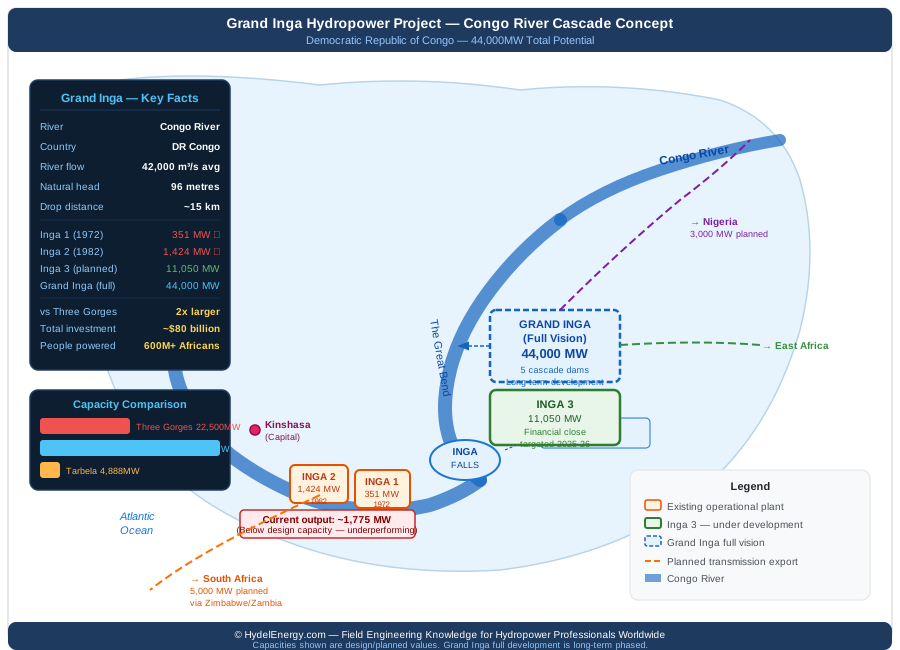
The Grand Inga Hydropower Project on the Congo River in the Democratic Republic of Congo is the most ambitious hydel development in human history. With a potential capacity of 44,000MW — nearly twice the output of China’s Three Gorges Dam — Grand Inga could theoretically power the entire African continent. Yet today the existing Inga complex generates less than 2,000MW — under 5% of its potential. This is the story of the world’s greatest untapped hydel resource — the engineering potential, the political reality, the financing challenges and what Grand Inga means for Africa’s energy future.