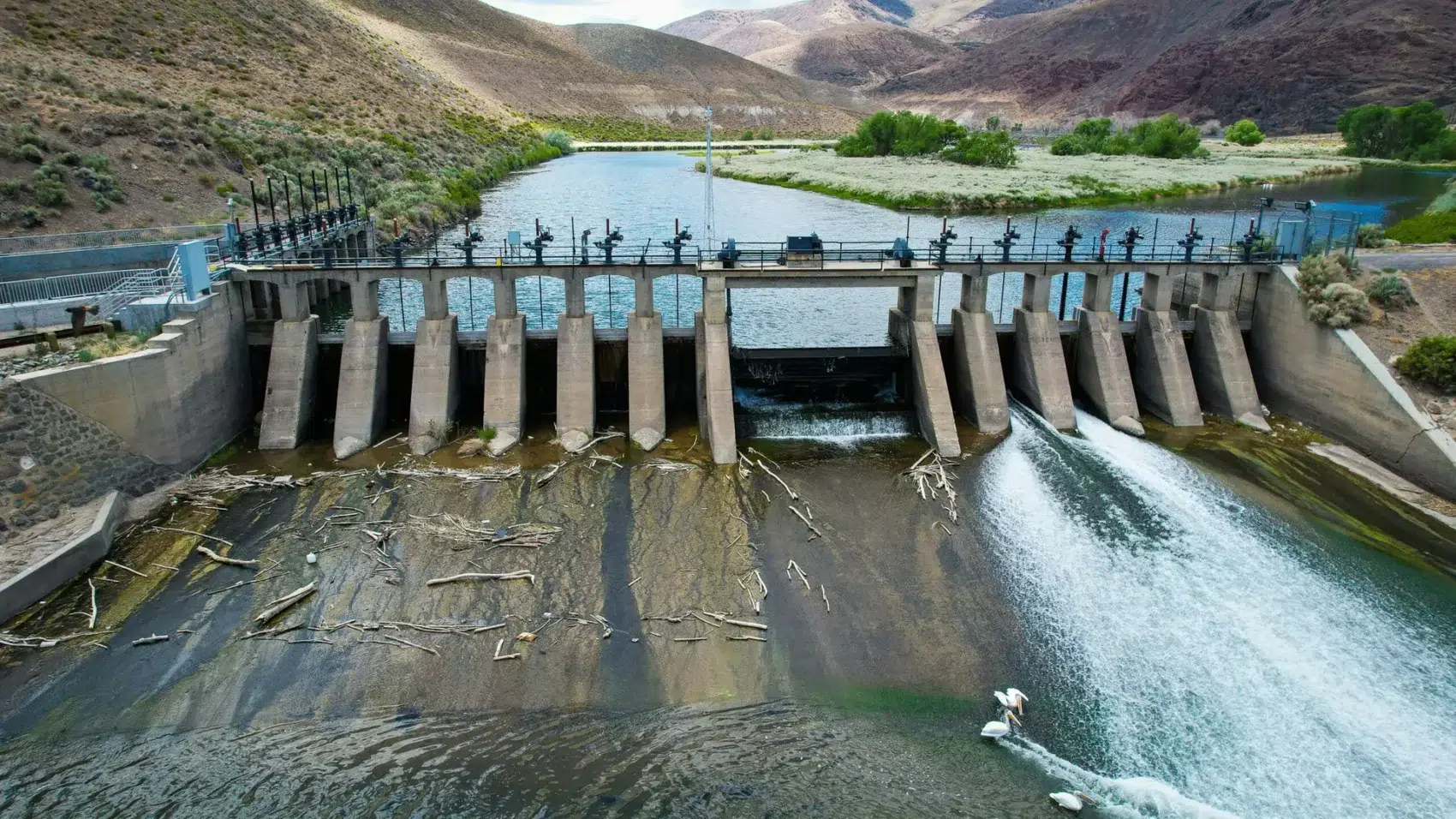
Photo by Manny Becerra on Unsplash Derby Dam, Sparks, NV, USA
Disadvantages of Hydel (Hydropower) Energy— The Complete Engineering Assessment
Hydel energy also referred as Hydropower is one of the most reliable and cost effective renewable energy sources on earth. But an honest engineering assessment requires acknowledging the disadvantages alongside the advantages. Understanding the real limitations of hydel energy — from field experience not textbook theory — is essential for engineers, developers, investors and policymakers working in the power sector.
This complete guide covers every significant disadvantage of hydel (Hydropower) energy with technical depth and practical field perspective.
Disadvantages of Hydel (Hydropower) Energy High Initial Capital Cost
Hydel energy projects require massive upfront capital investment before a single unit of electricity is generated. Civil works — dams, tunnels, penstocks, powerhouse caverns — are among the most expensive engineering structures ever built. A large storage hydel project costs billions of dollars and takes 8 to 15 years from planning to first generation. Diamer Bhasha Dam currently under construction in Pakistan carries an estimated cost of $14 billion. The Neelum Jhelum Hydropower Project cost approximately $5.15 billion for 969MW of capacity.
These capital requirements create significant financing challenges — particularly for developing countries that must rely on international development banks, bilateral lenders and private sector participation to fund construction. Cost overruns are endemic in hydel construction. Geological surprises, adverse weather, contractual disputes and logistical challenges in remote mountain locations regularly push final costs 20 to 40 percent above original estimates. This high capital cost and financial risk must be carefully managed from day one of project development.
Long Development Timeline
Hydel projects take longer to develop than any other electricity generation technology. A utility scale storage hydel project typically requires 3 to 5 years of feasibility studies, environmental assessments and financing negotiations before construction begins. Construction itself takes 5 to 10 years depending on project scale and complexity. From initial concept to first generation — 10 to 15 years is typical for major hydel projects. Pakistan’s Diamer Bhasha Dam was first proposed in the 1980s. Construction only began in 2020. Commercial operation is not expected until the early 2030s — a development timeline spanning five decades from concept to completion.
This extended timeline means hydel projects cannot respond quickly to immediate energy shortages. Countries facing urgent electricity deficits cannot rely on hydel as a short term solution. Thermal and solar generation — deployable in 2 to 3 years — are necessary alongside long term hydel development programs.
Environmental Impact — River Ecosystems
Large hydel projects — particularly storage projects with significant reservoirs — fundamentally alter river ecosystems in ways that cannot be fully reversed. Dam construction blocks fish migration routes disrupting breeding cycles of species that depend on seasonal river movement upstream. Reservoir flooding permanently submerges forests, agricultural land, wetlands and wildlife habitats. Water temperature downstream changes significantly as reservoir water released through turbines differs from natural river temperature — affecting aquatic species adapted to specific temperature ranges. Sediment transport — a critical ecological function of rivers — is disrupted by reservoirs that trap silt and prevent it reaching downstream ecosystems and river deltas.
The Indus Delta in Pakistan has experienced significant ecological degradation linked to upstream dam construction and water diversion. Methane emissions from decomposing vegetation in tropical reservoirs contribute to greenhouse gas emissions — a growing environmental concern in warm climate hydel development.
Run of river hydel projects have significantly lower environmental impact than storage projects but still alter natural flow regimes and affect downstream ecosystems. Modern hydel development requires comprehensive environmental impact assessments, minimum flow requirements and ecosystem monitoring programs — but the fundamental ecological transformation caused by large storage hydel remains a genuine and significant disadvantage that cannot be engineered away entirely.
Population Displacement and Social Impact
Large reservoir projects displace communities living in areas that will be permanently flooded. This is one of the most serious and ethically complex consequences of storage hydel development. China’s Three Gorges Dam displaced over one million people — the largest involuntary resettlement program in history. Pakistan’s Tarbela Dam displaced approximately 96,000 people https://en.wikipedia.org/wiki/Tarbela_Dam when constructed in the 1970s. Mangla Dam raised in 2009 displaced an additional 40,000 people from areas flooded by the expanded reservoir. Diamer Bhasha Dam currently under construction will displace approximately 35,000 people from 35 villages in Gilgit Baltistan.
Resettlement is complex, expensive and frequently inadequate. Loss of ancestral lands, disruption of agricultural livelihoods, submergence of cultural and historical heritage sites and breakdown of established community structures are real human costs that affected populations bear for generations. International financing institutions now require comprehensive resettlement action plans, fair compensation packages and livelihood restoration programs as conditions of project financing.
Despite improved standards and genuine efforts on modern projects, population displacement remains one of the most challenging, contentious and ethically demanding aspects of large hydel development globally.
Dependence on Hydrology and Climate
Hydel generation is entirely dependent on water availability — determined by rainfall, snowmelt and river hydrology beyond any engineer’s control. Drought years reduce river flows and reservoir levels, directly reducing generation. Pakistan’s hydel output drops significantly during dry winter months when Himalayan snowmelt is minimal and monsoon rains have ended. East African countries heavily dependent on hydel — Kenya, Uganda, Ethiopia — have experienced serious power shortages during prolonged drought periods when reservoir levels dropped below minimum operating levels. Climate change is making this hydrological vulnerability increasingly acute.
Changing precipitation patterns, accelerating glacier retreat and increasing drought frequency are altering the hydrology that hydel projects were designed around. A project designed for a specific river flow regime may underperform as climate patterns shift over its 50 to 100 year operational life. Glacial lake outburst floods — increasingly common as Himalayan glaciers retreat — pose new operational and safety risks for hydel infrastructure in mountain regions. Sedimentation of reservoirs — where silt carried by rivers gradually fills storage capacity — progressively reduces generation potential over decades.
Pakistan’s Tarbela reservoir has lost significant storage capacity to sedimentation since commissioning in 1976 — reducing its effective generation and flood control capability. This fundamental dependence on hydrology and climate is a structural disadvantage that no engineering solution can fully overcome.
Geological and Construction Risks
Hydel projects are built in some of the most geologically complex and remote environments on earth. Mountain rivers — where most high head hydel potential exists — run through active geological zones characterized by earthquake risk, unstable slopes, complex rock formations and extreme weather conditions. Underground powerhouse caverns and headrace tunnels encounter unexpected geological conditions that delay construction and escalate costs significantly.
Tunnel boring through fractured rock, managing underground water ingress, stabilizing cavern walls in weak rock formations and maintaining worker safety in confined underground environments under high pressure water are engineering challenges that even the most experienced international contractors face on every major hydel project. Pakistan’s mountainous terrain — some of the most seismically active and geologically complex on earth — presents extraordinary construction challenges. Neelum Jhelum, Diamer Bhasha, Dasu and other major projects under construction in KPK and Gilgit Baltistan all face geological conditions that have caused delays, cost overruns and engineering modifications during construction.
Dam safety is a non-negotiable concern — a dam failure is a catastrophic event with potentially devastating consequences for downstream populations. Rigorous dam safety monitoring, regular structural inspections, emergency action plans and downstream flood risk management are mandatory requirements that add significant operational cost and complexity to hydel plant management.
Limited Suitable Sites
Not every river or location is suitable for hydel development. Economically viable hydel generation requires specific combinations of water flow and hydraulic head — the vertical drop between intake and turbine. High head sites in mountainous regions offer the best hydel potential but are geographically remote, logistically challenging and environmentally sensitive. Low head sites near population centers rarely have sufficient flow velocity for economic generation.
As the most accessible and economically attractive hydel sites are progressively developed — as has already happened in Europe, North America and parts of Asia — remaining undeveloped sites tend to be in more remote, more geologically challenging and more environmentally sensitive locations.
This progressive depletion of premium hydel sites means future hydel development will generally be more expensive, more technically demanding and more environmentally complex than historical projects. Pakistan and the broader Himalayan region remain among the world’s most significant repositories of undeveloped hydel potential — but even here the most accessible sites are already under development or planned.
Transmission Challenges
The best hydel sites are typically in remote mountain regions far from major population centers and load centers. Transmitting electricity from remote hydel plants to cities requires extensive high voltage transmission infrastructure — itself expensive, technically demanding and environmentally impactful. Pakistan’s major hydel projects in KPK and Gilgit Baltistan must transmit electricity hundreds of kilometres to load centers in Punjab and Sindh — requiring substantial transmission investment that adds significantly to the overall cost of hydel generation.
Transmission losses over long distances reduce the effective delivered output of hydel plants. Grid integration of large hydel plants in remote locations requires careful protection coordination, voltage regulation and stability management. In developing countries transmission infrastructure often lags behind generation development — leaving completed hydel plants unable to deliver their full output to where it is needed most.
Field Engineer’s Perspective on Hydel Disadvantages
After 15 years working inside hydel projects across Pakistan — from construction through commissioning to operation — every disadvantage listed here has been experienced firsthand. Cost overruns on major projects. Communities displaced by reservoirs. Generation dropping during drought winters. Geological surprises in tunnels causing months of delay. Transmission constraints limiting plant output. These are not theoretical concerns — they are operational realities that every hydel engineer encounters.
The honest assessment is that hydel energy’s disadvantages are real, significant and must be taken seriously by everyone involved in project development. They are not reasons to abandon hydel development — Pakistan’s 60,000MW of untapped potential is too valuable and too strategically important to leave undeveloped.
But they are reasons to plan more carefully, engineer more rigorously, manage communities more fairly and operate more professionally. Done right, hydel energy’s advantages far outweigh its disadvantages. Done wrong, the disadvantages become defining failures that affect communities, ecosystems and national energy systems for generations.
Conclusion — Honest Engineering Assessment
The disadvantages of hydel energy are substantial and real. High capital costs, long development timelines, environmental impact on river ecosystems, population displacement, hydrological dependence, geological risks, limited suitable sites and transmission challenges all present genuine challenges that hydel developers, engineers and policymakers must address seriously.
Understanding these disadvantages honestly is not anti-hydel — it is pro-engineering. The best hydel projects are those developed by teams that understand both the extraordinary potential and the genuine limitations of hydel energy, and apply that understanding to every decision from site selection through construction, commissioning and operation.
For a complete picture of hydel energy read our guides on Hydel Power Advantages and Disadvantages, Is Hydel Energy Renewable and What is Hydel Power.