
Is Hydel Energy Renewable or Non-Renewable? The Complete Engineering Answer
The question of whether hydel energy is renewable or non-renewable seems simple on the surface. Water flows, turbines spin, electricity is generated — and water keeps flowing. But the complete engineering answer is more nuanced than a simple yes or no. Having spent 15 years working inside hydel projects across Pakistan — from construction through commissioning to rehabilitation — this guide gives the definitive field engineer’s answer to whether hydel energy is truly renewable, and what that actually means in practice.
Is Hydel Energy Renewable – The Short Answer — Yes, Hydel Energy is Renewable
Hydel energy is renewable because its fuel source — water — is continuously replenished by the natural water cycle. Rain falls, snow melts, rivers flow, water passes through turbines and returns downstream to evaporate and fall again as rain. This cycle has continued for millions of years and will continue indefinitely. Unlike coal, gas or oil — which took millions of years to form and cannot be replaced once burned — water is never consumed in hydel generation. The same water molecule that spun a turbine at Tarbela Dam today will evaporate, form clouds, fall as rain in the Himalayas and return to spin that turbine again. That is the fundamental definition of renewable energy — and hydel energy meets it completely.
But Here’s What Most Articles Don’t Tell You
Calling hydel energy renewable is correct — but incomplete. The renewable nature of hydel depends entirely on the condition of the infrastructure that harnesses it. A hydel plant with silted reservoirs, deteriorating turbines, aging generators and crumbling civil structures doesn’t generate renewable energy efficiently — it generates problems. The water cycle continues perfectly. But the engineering infrastructure that converts water energy into electricity has a finite operational life without proper maintenance and rehabilitation. This is the distinction most articles about hydel energy miss completely. Hydel energy is renewable. Hydel infrastructure requires active management, maintenance and periodic rehabilitation to remain productive. Understanding this distinction is essential for engineers, developers, policymakers and investors working in the hydel sector.
How Long Does Hydel Infrastructure Last?
This is where hydel energy becomes truly extraordinary compared to every other energy technology. A well designed and properly maintained hydel plant operates for 50 to 100 years — sometimes longer. Civil structures — dams, tunnels, penstocks, powerhouse caverns — built with proper engineering last generations. The Hoover Dam in the United States has been generating power since 1936 — 90 years of continuous operation. Tarbela Dam in Pakistan has operated since 1976 — nearly 50 years. Mangla Dam since 1967 — almost 60 years. These are not exceptional cases. They are the norm in hydel engineering. No solar panel manufactured today will be generating electricity in 2075. No wind turbine installed today will be operating in 2085. No gas plant commissioned today will still be running in 2090. But hydel plants commissioned today will very likely still be generating clean renewable electricity when none of us are around to see it. That generational lifespan is hydel energy’s most underappreciated renewable characteristic.
Rehabilitation — The Proof That Hydel Is Truly Renewable
The ultimate proof of hydel energy’s renewable nature is not the water cycle — it is the global rehabilitation industry that has emerged around aging hydel infrastructure. When a coal plant reaches end of life it is demolished. When a gas turbine ages beyond economic repair it is scrapped. When a hydel plant ages — it is rehabilitated, modernized and given another 30 to 50 years of productive life. This happens on every continent, in every type of economy, at every scale of hydel development. Four case studies from around the world illustrate this reality clearly.
Case Study 1 — Dargai Hydropower Plant, Pakistan (1952)
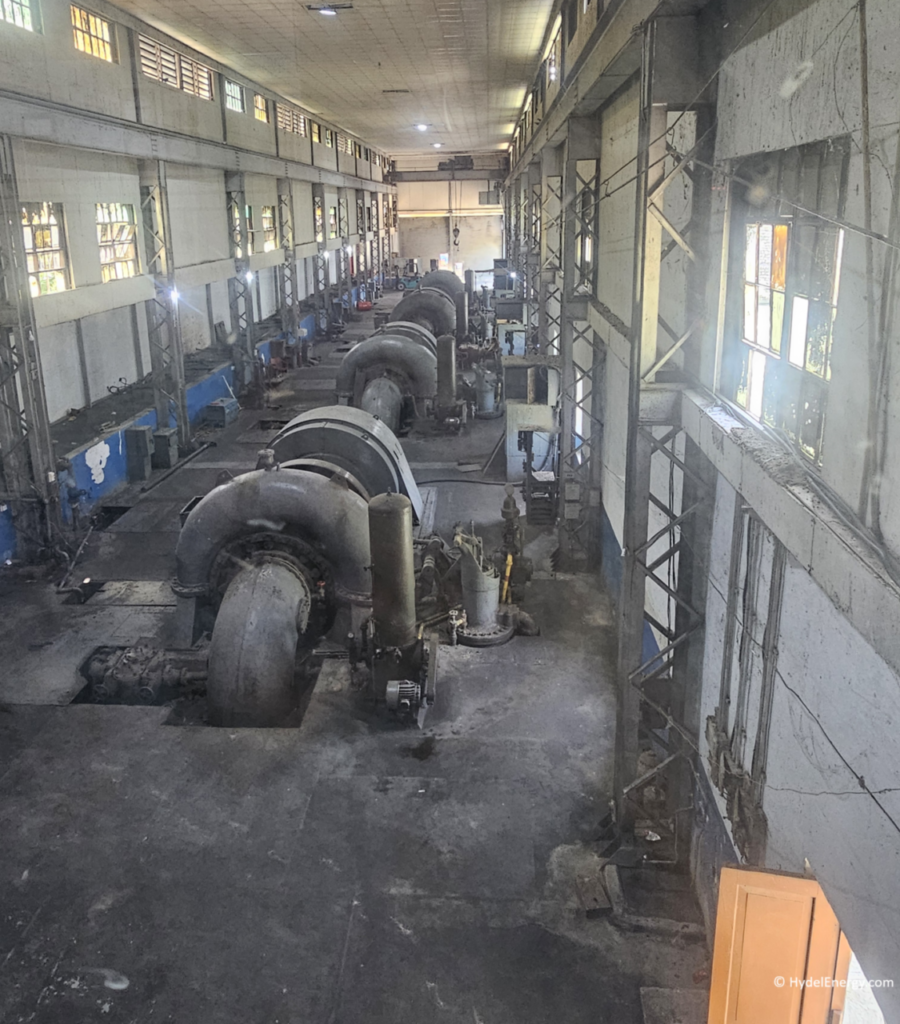
Dargai Hydropower Plant — officially Malakand-II — sits on the Swat River Canal in Malakand District, Khyber Pakhtunkhwa. Commissioned in December 1952, this run-of-river plant has been generating clean hydel electricity for over 70 years. With 4 units of 5MW each — 20MW installed capacity — Dargai has generated 162 GWh annually for decades. Rather than decommissioning this 70 year old plant, the French Development Agency — AFD — provided a loan and grant totalling €52 million to WAPDA for complete rehabilitation and modernization. Works include increasing capacity from 20MW to 22MW, modernizing balance of plant, upgrading switchyard and peripheral equipment and rectifying technical issues in the power channel, sand trap and forebay. A Rs10.6 billion contract was awarded to a joint venture of Chinese and Pakistani firms for civil and electromechanical works. A plant commissioned by engineers who are no longer alive is being rehabilitated to generate clean renewable hydel electricity for another generation. That is what renewable truly means.
Case Study 2 — Warsak Hydropower Plant, Pakistan (1960)
Warsak Hydropower Plant on the Kabul River near Peshawar was commissioned in 1960 — 65 years ago. Originally designed for 243MW, decades of heavy siltation from the Kabul River reduced effective generation capacity to approximately 100MW — less than half its design capacity. Rather than abandoning this aging asset, a major international rehabilitation program was launched with funding from the European Union, Agence Française de Développement, KfW Germany and the European Investment Bank — a total budget of €162 million. The rehabilitation program targeted complete restoration of Warsak to its full 243MW capacity for another 40 years of operation. This multi-donor international investment in a 65 year old Pakistani hydel plant sends a clear signal — the global development finance community considers rehabilitated hydel infrastructure worth hundreds of millions of euros of investment. No development bank is spending €162 million rehabilitating a 65 year old coal plant anywhere in the world. Only hydel commands this level of confidence in its long term renewable value.
Case Study 3 — Gomal Zam Hydropower Station
A smaller but exceptionally well-documented example is Gomal Zam Hydel Power Station in South Waziristan, commissioned in 2013 with 17.4MW capacity across two 8.7MW Francis-type units. In October 2016, voltage fluctuations on its 132kV transmission connection overwhelmed a protective control system, causing a surge that damaged both unit rotors and forced both units offline.
WAPDA restored Unit 2 using in-house expertise in 2018, returning the plant to half capacity. Unit 1 remained out of service for several more years due to the severity of the damage, until a dedicated rehabilitation contract worth Rs. 359.5 million began on April 5, 2026, and achieved full commissioning testing and national grid synchronization in just 80 days, on June 25, 2026 — restoring the plant to its full original 17.4MW capacity and its annual generation potential of roughly 90.9 million units.
Source: USAID OIG Audit Report 5-391-18-001-P; WAPDA / Associated Press of Pakistan, June 2026.
Case Study 4 — Luachimo Hydropower Plant, Angola (International)
The Luachimo hydropower rehabilitation project in Angola demonstrates that hydel rehabilitation is not limited to South Asia — it is a global phenomenon. The Luachimo plant was modernized and expanded from 8.8MW to 34MW — nearly four times its original capacity — commissioned in May 2024. The $212 million project was led by China Gezhouba Group — the same contractor involved in major hydel developments across Asia and Africa. This rehabilitation did not merely restore original capacity — it multiplied it. Engineers took aging hydel infrastructure and transformed it into a significantly more productive asset through modern turbine technology, upgraded electrical systems and improved civil works. The Luachimo case demonstrates a critical point — hydel rehabilitation is not just about maintaining existing capacity. Modern rehabilitation technology can significantly increase output from existing civil infrastructure, delivering more renewable energy from the same river resource that has been generating electricity for decades.
Case Study 5 — United States National Hydropower Rehabilitation Program
Perhaps the most powerful evidence that hydel energy is genuinely renewable comes from the world’s largest economy. The United States Department of Energy selected 293 hydroelectric projects across 33 states to receive up to $430 million in incentive payments for capital improvements related to grid resiliency, dam safety and environmental standards. Most US hydropower facilities are over 50 years old — yet the federal government is investing hundreds of millions of dollars modernizing and extending their operational life rather than replacing them with new generation technologies. This is not a developing country making do with aging infrastructure — this is the United States of America making a deliberate strategic decision that rehabilitated hydel infrastructure is worth massive federal investment. The Bipartisan Infrastructure Law allocated $753 million specifically for hydropower incentives including capital investments, production incentives and efficiency improvements for existing plants. When the US government spends $753 million rehabilitating hydel plants — the renewable credentials of hydel energy are beyond question.
Is Hydel Energy Environmentally Renewable?
The renewable classification of hydel energy is scientifically clear. However honest engineering assessment must acknowledge that hydel energy is not without environmental impact. Large storage hydel projects — those with significant reservoirs — alter river ecosystems, affect fish migration, displace communities and change downstream hydrology permanently. These are real impacts that cannot be dismissed. However two important distinctions must be made. First — environmental impact does not negate renewable classification. Renewable energy means the fuel source is naturally replenished — not that the generation technology has zero environmental footprint. Wind turbines kill birds. Solar panels require rare earth minerals. Hydel dams alter river ecosystems. All renewable technologies have environmental costs. Second — modern hydel development has made enormous progress in reducing environmental impact. Run of river hydel projects — those without significant storage — have dramatically lower environmental footprint than large storage projects. Fish friendly turbine designs are being developed and deployed globally. Minimum environmental flow requirements are now standard on all new hydel projects. Environmental mitigation has become a core engineering discipline in hydel development — not an afterthought.
Field Engineer’s Perspective — 15 Years Inside Hydel Projects
After 15 years working inside hydel projects across Pakistan — from construction through commissioning to rehabilitation — the renewable nature of hydel energy is not an abstract concept. It is a daily operational reality. Standing inside the Dargai powerhouse and seeing 70 year old civil structures still performing their design function — rock excavated and concrete poured by engineers decades before modern computing existed — is a powerful reminder of what genuine renewable infrastructure looks like. Watching rehabilitation teams modernize aging generating units and restore them to full capacity — or beyond — demonstrates something no textbook can fully convey. Hydel energy is renewable not just because water keeps flowing. It is renewable because the engineering discipline that harnesses water energy has developed the knowledge, technology and methodology to maintain, rehabilitate and upgrade hydel infrastructure across generations. The water cycle is nature’s contribution to hydel renewability. Engineering excellence is humanity’s contribution. Both are essential. Both are proven. After 15 years in the field — the answer to whether hydel energy is renewable is not just yes. It is yes — for as long as rivers flow and engineers maintain the infrastructure that harnesses them.
Conclusion — Hydel Energy Is Renewable, Rehabilitable and Generational
Hydel energy is unquestionably renewable. The water cycle that powers hydel generation has operated for millions of years and will continue indefinitely. But the complete answer goes beyond the simple renewable classification. Hydel energy is the only renewable technology that improves with age when properly maintained. A 70 year old hydel plant in Pakistan is being rehabilitated with European development funding. A 65 year old plant is being restored to full capacity with €162 million of international investment. A plant in Angola has quadrupled its capacity through modern rehabilitation. The United States is spending $753 million modernizing hydel infrastructure that has been generating electricity for over half a century. No other energy technology commands this level of global investment in aging assets. Solar panels are replaced after 25 years. Wind turbines after 20-25 years. Gas plants after 30-40 years. Hydel plants are rehabilitated after 50-70 years and given another generation of productive life. That is not just renewable energy. That is generational energy infrastructure. For engineers, developers, investors and policymakers working in the power sector — understanding the full renewable picture of hydel energy is not just technically important. It is strategically essential for building energy systems that serve nations for generations rather than decades.
For more field tested knowledge on hydel energy — explore our complete guides on Hydel Power Advantages and Disadvantageshttps://hydelenergy.com/hydel-power-advantages-disadvantages/ and What Does Hydel Meanhttps://hydelenergy.com/hydel-meaning/.