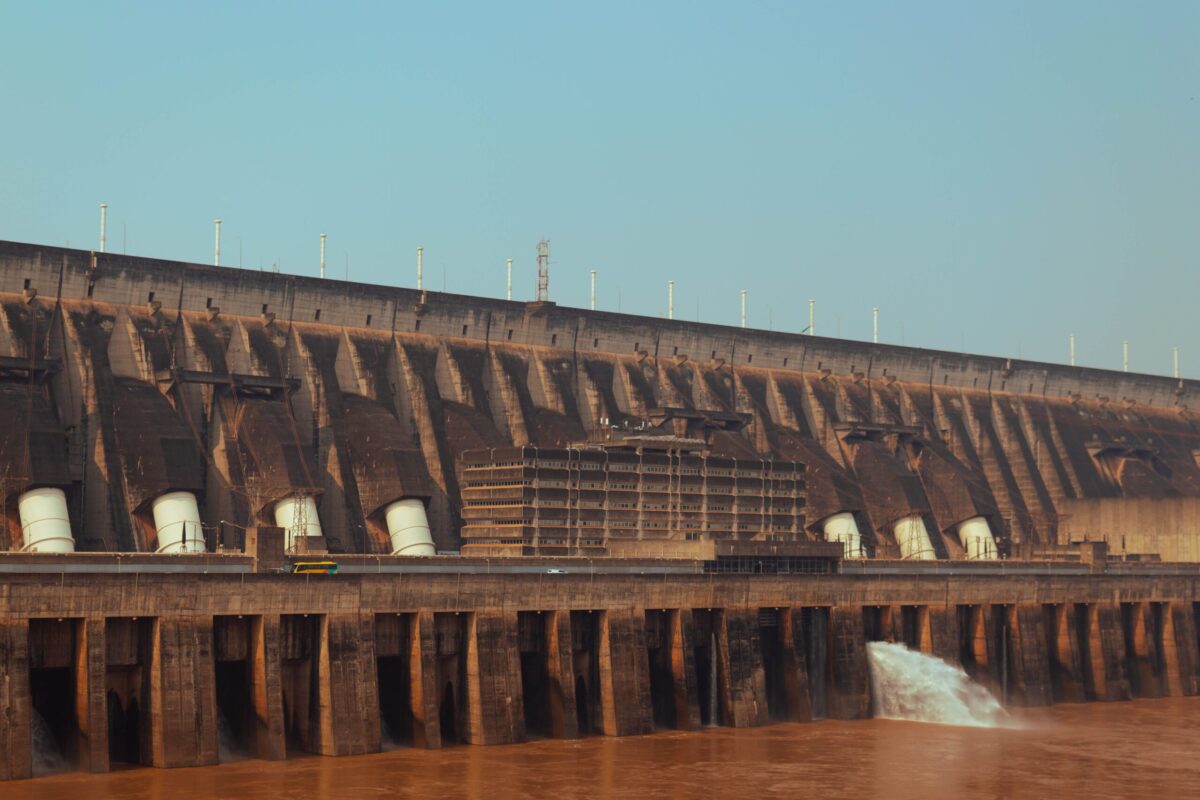
Itaipu Dam — Inside the World’s Most Powerful Binational Hydropower Plant
Most hydropower projects are built by one country, on one river, under one grid. Itaipu breaks all three rules — and in doing so, it became one of the most instructive engineering case studies in the history of the industry.
Sitting on the Paraná River between Brazil and Paraguay, Itaipu is a 14,000MW hydroelectric plant, the second-largest in the world by installed capacity, and for a long stretch after its commissioning, the single largest producer of electricity on the planet. But its real distinction isn’t the numbers. It’s that Itaipu is owned, financed, and operated jointly by two sovereign nations — and has been, without interruption, for half a century.
That single fact shaped nearly every engineering and commercial decision behind the plant, and it offers a working template for any hydel project built on a river that doesn’t belong to one country alone.
Itaipu Dam- Born From a Border Dispute
Itaipu dam origins trace back to 1966, when Brazil and Paraguay signed the Act of Iguaçu — an agreement that resolved a long-standing boundary dispute over the Paraná River by proposing something unusual: instead of dividing the river’s hydropower potential, the two nations would develop it together, as equal partners.
That agreement matured into the 1973 Itaipu Treaty, which established Itaipu Binacional, the entity that would own, build, and operate the plant. Construction began in 1975 and ran for well over a decade — one of the largest civil engineering undertakings of the 20th century, involving the diversion of the Paraná River itself before the dam could be built in the riverbed.
The plant began generating power in 1984, with its final generating unit commissioned in 2007.
Two Grids, Two Frequencies, One River
The most distinctive engineering challenge at Itaipu has nothing to do with the dam or the reservoir. It’s the fact that Brazil and Paraguay run their national grids at different electrical frequencies — Brazil at 60 Hz, Paraguay at 50 Hz.
A hydropower plant generates electricity at whatever frequency matches the grid it feeds. Itaipu had to feed two grids running at two different frequencies, from a single dam, at the same time.
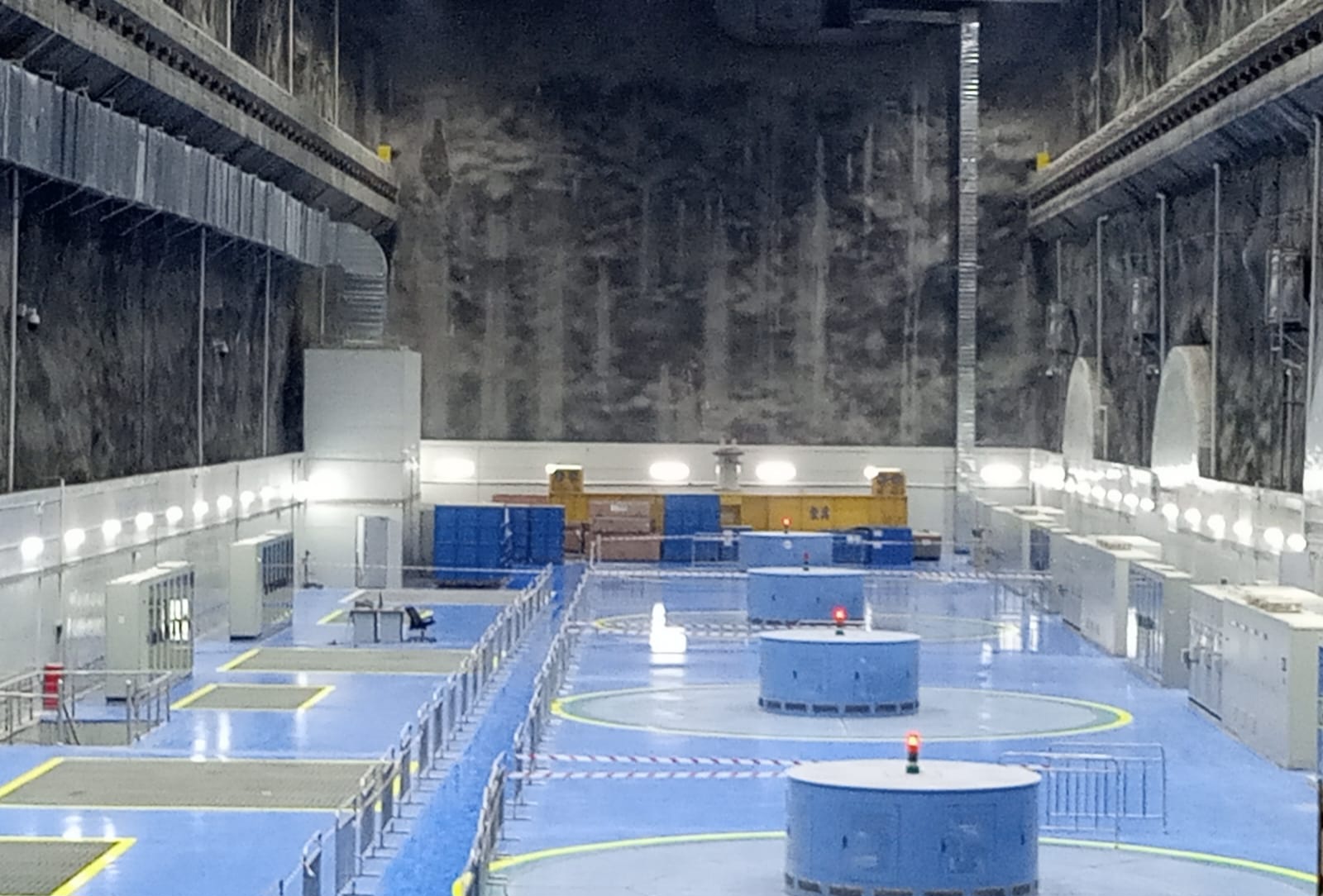
The solution was to build two separate sets of generating units on the same powerhouse: ten units generating at 50Hz for Paraguay, and ten at 60Hz for Brazil. Each set is mechanically and electrically independent, tuned to its own grid’s frequency from the point of generation.
Paraguay uses only a fraction of the power its 50Hz units produce. The surplus has to reach Brazil — but it can’t simply be fed into Brazil’s grid at 50Hz. So Itaipu converts it: the surplus 50Hz power is transmitted via two high-voltage direct current (HVDC) lines, each roughly 800 kilometers long, running at 600kV, into a converter station near São Paulo. There, it’s converted from DC back to AC at 60Hz and injected into Brazil’s grid.
It’s a rare, large-scale example of a single hydropower plant engineered from the ground up to serve two electrically incompatible grids — and it’s done so continuously for four decades.
An Entitlement Nobody Fully Uses
Under the treaty, Brazil and Paraguay each own 50% of Itaipu’s output, regardless of how much electricity either country actually needs.
In practice, Paraguay’s national demand is a small fraction of its entitled share — historically, on the order of 15% of its 50% allocation. The rest is sold to Brazil under the treaty’s terms. The arrangement is significant for both countries: Itaipu supplies roughly 90% of Paraguay’s total electricity consumption, while contributing somewhere in the range of 10–15% of Brazil’s — a country with a far larger grid and far greater overall demand.
It’s a clean illustration of a principle that matters on any shared-river hydel project: entitlement and consumption are not the same thing, and the commercial framework has to account for that gap from day one — including how the surplus-producing country is compensated for power it generates but doesn’t use.
A Treaty That Outlasted Its Own Debt
Itaipu’s construction was financed jointly by Brazil and Paraguay, largely through loans that were repaid over decades using revenue from electricity sales — mostly from Brazil, given its far larger consumption of the plant’s output.
That debt was fully retired in 2023, nearly fifty years after the original treaty was signed. It’s a rare thing in infrastructure: a complete financial lifecycle, from treaty to construction to full debt repayment, tracked over half a century, under one continuously operating binational entity — with the operating structure and equal-ownership terms unchanged throughout.
What Itaipu Teaches About Shared-River Hydel Development
Itaipu isn’t a template that can be copied directly onto every shared-river project — the political relationship between Brazil and Paraguay, the treaty mechanics, and the scale involved are specific to this case. But the underlying structural lessons apply broadly, to any hydel development on a river shared between two or more nations — the Mekong basin, the Zambezi, or Indus tributaries among them:
- Ownership and entitlement need to be defined before design begins, not negotiated after construction — the 50/50 split shaped everything downstream, including electromechanical design.
- Grid incompatibility is solvable at the generation stage, not just the transmission stage. Building dual-frequency generating units, rather than forcing a single frequency and converting everything afterward, distributed the engineering solution more efficiently across the plant.
- A surplus-producing partner needs a clear commercial mechanism, not just a theoretical entitlement. Paraguay’s arrangement to sell unused power to Brazil is what makes the treaty function economically, not just legally.
- A binational operating entity needs staying power. Itaipu Binacional has operated continuously for fifty years under the same basic structure — treaty-based joint ventures on infrastructure this large only work if the institutional framework is built to outlast individual governments.
For engineers and planners working on any river that crosses a border, Itaipu remains the longest-running proof that shared hydropower development can work — not despite the complexity of two nations, two currencies, and two electrical standards, but by designing directly for it from the start.
For more on the global hydel sector explore our complete guides on Hydel Power in Nepal, Solar and Hydropower Integration and Grand Inga Hydropower Project.